
Understand the course, subjects, learning style and difference from nearby computing branches.
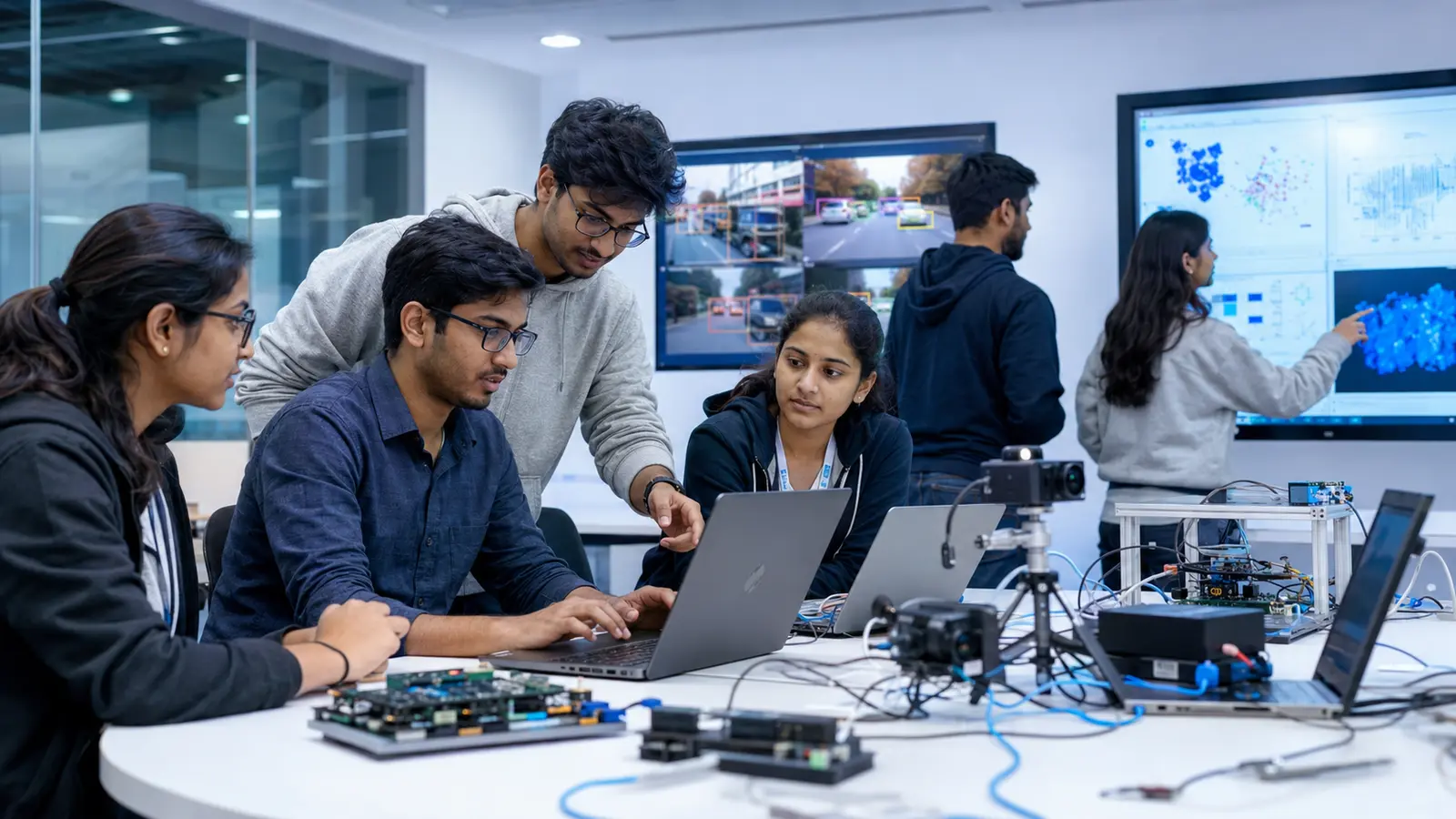
Understanding Artificial Intelligence and Data Science
Artificial Intelligence and Data Science is an engineering field that combines computer science, mathematics, statistics, Machine Learning and data management. The course teaches students how to collect information, study patterns, develop predictive models and create intelligent systems that can support decisions or automate selected tasks.
Students learn how data moves through its complete journey. This begins with collecting and storing information and continues through cleaning, analysis, modelling, testing, visualisation and responsible use. The course also develops programming and software-engineering skills so that students can convert an analytical idea into a working application.
Artificial Intelligence and Data Science is available through different qualifications, including B.E., B.Tech, B.Sc., M.Sc., M.E., M.Tech, MCA, integrated programmes, diplomas and certificate courses. The duration, eligibility and academic depth depend on the qualification and institution.
The B.E. or B.Tech programme is generally completed in four years. It normally includes eight semesters, programming laboratories, mathematical subjects, projects, internships and a final-year project. Postgraduate engineering programmes are usually completed in two years, while integrated programmes may take five years.
The course is suitable for students who enjoy computers, mathematics and practical problem-solving. Previous programming experience is useful but is not compulsory for every undergraduate programme. Students should, however, be ready to practise coding and mathematics throughout the course.
What is Artificial Intelligence and Data Science?
Artificial Intelligence and Data Science is the study of how information can be used to understand problems, discover patterns, predict results and develop systems that perform defined tasks intelligently.
Data Science focuses on the complete process of working with data. It includes collecting information, correcting errors, organising records, analysing patterns and explaining findings. Artificial Intelligence focuses on developing computer systems that can recognise patterns, generate responses, recommend actions or make limited decisions.
Machine Learning connects these areas. It enables a computer model to learn patterns from examples instead of receiving a separate fixed rule for every possible situation.
Consider an online shopping platform. Data Science can be used to examine purchasing behaviour, product returns and seasonal demand. Artificial Intelligence can use these findings to recommend products, identify suspicious transactions or forecast future stock requirements.
The same combination is used in many areas:
- Hospitals use data to study patient flow and support medical research.
- Banks analyse transactions to identify unusual behaviour.
- Manufacturers use machine data to predict maintenance requirements.
- Retail companies study demand and manage inventory.
- Logistics companies improve routes and delivery estimates.
- Agricultural organisations study weather, soil and crop information.
- Educational platforms analyse learning progress and recommend content.
The course does not teach students to create machines that think exactly like human beings. Most present-day Artificial Intelligence systems are designed for particular tasks. Their quality depends on correct data, suitable methods, careful testing and responsible use.
A student should therefore learn more than how to operate an AI tool. A good programme develops foundations in mathematics, algorithms, databases, programming, statistics and software development. These foundations remain useful even when popular tools and platforms change.
Highlights – Artificial Intelligence and Data Science
| Particular | Course Information |
|---|---|
| Course name | Artificial Intelligence and Data Science |
| Common qualifications | B.E., B.Tech, B.Sc., M.Sc., M.E., M.Tech, MCA and integrated programmes |
| Undergraduate duration | Normally four years for B.E./B.Tech |
| Postgraduate duration | Generally two years |
| Integrated duration | Commonly five years |
| Typical UG eligibility | Class 12 with the subjects and minimum marks required by the institution |
| Common engineering subject requirement | Physics and Mathematics, usually with another approved science or technical subject |
| Admission route | National, state, university or institution-level entrance examination; some programmes may consider merit |
| Important study areas | Programming, statistics, databases, Machine Learning, Artificial Intelligence and data engineering |
| Common entrance examinations | JEE Main, state engineering entrance examinations, university tests and GATE for relevant PG programmes |
| Popular career areas | Data analysis, software development, data engineering, Machine Learning and business intelligence |
| Common job profiles | Data Analyst, Data Engineer, Machine Learning Engineer, Business Intelligence Developer and AI Engineer |
| Major employment sectors | IT, banking, healthcare, consulting, retail, manufacturing, logistics and telecommunications |
| Learning style | Classroom study, coding laboratories, assignments, projects, internships and practical assessment |
Students should treat this table as a general guide. Every college may follow a different curriculum, fee structure, admission method and degree title.
Specialisation or Similar Ones
Artificial Intelligence and Data Science shares subjects with several computing and engineering programmes. Students should understand the differences before selecting a course.
| Related Course | Main Focus |
|---|---|
| Computer Science Engineering | Broad computer science, software, systems, algorithms and networks |
| Artificial Intelligence | Intelligent systems, reasoning, planning, learning and automation |
| Artificial Intelligence and Machine Learning | Machine Learning methods, neural networks and intelligent applications |
| Data Science | Statistics, data analysis, visualisation, modelling and decision support |
| Computer Science and Data Science | Computer science foundations with additional data-focused subjects |
| Big Data Analytics | Large-scale data storage, processing and analytical systems |
| Business Analytics | Using data to improve business decisions and performance |
| Robotics and Artificial Intelligence | Intelligent software combined with sensors, control and physical machines |
| Internet of Things | Connected devices, sensors, networks and data collection |
| Cybersecurity | Protecting computer systems, networks, applications and information |
| Cloud Computing | Delivering computing, storage and software services through cloud platforms |
Artificial Intelligence and Data Science usually gives greater importance to statistics, data preparation, Machine Learning and analytical applications than a general Computer Science Engineering programme.
Computer Science Engineering may provide broader coverage of operating systems, computer architecture, networks, compilers and software engineering. However, the difference depends on the university syllabus. Some specialised courses retain a strong computer science foundation, while others reduce important core subjects to add more electives.
Students should compare compulsory subjects rather than judging from the title alone. A strong programme should include mathematics, algorithms, databases, operating systems, software engineering, Machine Learning and responsible data practices.
Scope of Artificial Intelligence and Data Science in India and Abroad
Artificial Intelligence and Data Science has applications wherever organisations use information to understand performance, predict outcomes or automate defined processes.
In India, opportunities are developing across technology services, software products, banking, insurance, healthcare, manufacturing, retail, telecommunications, logistics, consulting and public-sector technology.
Scope in Information Technology
Technology organisations employ graduates for software development, analytics, data platforms, Machine Learning applications, testing and cloud services.
Entry-level graduates may begin as:
- Software Engineer
- Data Analyst
- Business Intelligence Analyst
- Junior Data Engineer
- Analytics Associate
- Machine Learning Associate
Specialised roles often require strong projects or professional experience.
Scope in Banking and Financial Services
Financial organisations use data for:
- Fraud detection
- Credit analysis
- Customer behaviour
- Risk assessment
- Transaction monitoring
- Process automation
- Personalised services
Because financial information is sensitive, professionals must understand security, privacy, fairness and regulatory controls.
Scope in Healthcare
Healthcare applications include:
- Medical-image analysis
- Patient-risk prediction
- Hospital-resource planning
- Research-data analysis
- Treatment-support systems
- Health-record management
Healthcare AI must be tested carefully. A technically impressive model should not replace qualified medical judgement without proper validation and governance.
Scope in Manufacturing
Manufacturers use sensor and production data for:
- Predictive maintenance
- Quality inspection
- Demand planning
- Energy management
- Production optimisation
- Supply-chain analysis
Scope in Retail and E-commerce
Retail organisations use Artificial Intelligence and Data Science for:
- Product recommendations
- Inventory planning
- Customer segmentation
- Demand forecasting
- Pricing analysis
- Fraud detection
- Delivery prediction
Scope Abroad
International opportunities depend on academic qualifications, professional experience, local employment conditions, language requirements and work permission.
Students interested in working abroad should develop strong foundations rather than relying only on one tool. Programming, mathematics, data engineering, Machine Learning, software development and communication are transferable across countries.
Advanced study may be useful for research, highly specialised technical roles or academic careers.
Continue your AI and Data Science research
Course at a Glance
- Course AreaComputing and emerging technology
- Study PathwaysB.E./B.Tech, postgraduate and research pathways
- Primary FocusArtificial intelligence, statistics, data engineering, analytics, machine learning and responsible data products.