
Understand programme levels, core subjects, practical learning, specialisations and career pathways.
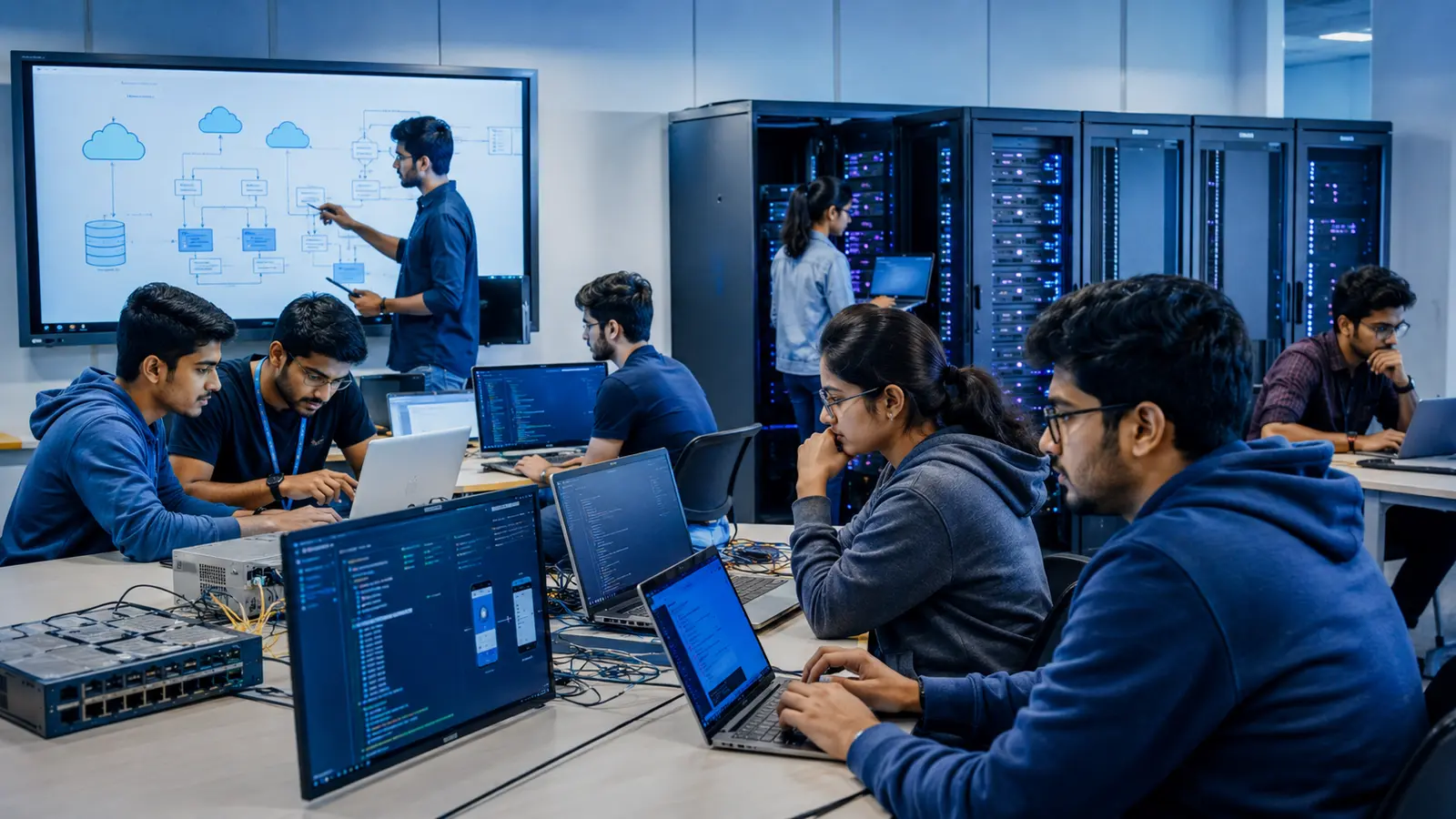
Understanding Information Technology
Information Technology studies how organisations and users apply computing to manage information and deliver digital services. An IT graduate may understand how applications are developed, how operating systems manage resources, how databases preserve transactions, how networks connect services, how cloud systems scale and how security controls reduce risk.
The field developed as organisations adopted computers for records, communication and decision-making. Modern IT covers software platforms, enterprise applications, internet services, cybersecurity, data systems, cloud computing, automation and user support while retaining programming and computing foundations.
Core identity of the course
Information Technology is not limited to assembling desktop computers, installing office software or repairing laptops. Those activities may appear in support work, but a degree goes much deeper into programming, databases, networks, software design, security, cloud systems, data management, testing and service delivery.
A student may learn how to:
- write reliable programs and analyse their efficiency;
- understand computer architecture and operating platforms;
- integrate applications, databases, networks and cloud services;
- develop operating-system and network concepts;
- build databases and web or mobile applications;
- protect devices, software and networks from threats;
- test performance, reliability and security;
- design a secure and maintainable information system for a real problem.
Breadth of the IT curriculum
IT is broader than learning a programming language or preparing for one software job. Programming is a practical foundation, while databases, operating systems, networks, software engineering, web systems, cloud platforms and security explain how to build and operate dependable services.
The curriculum may also provide electives in artificial intelligence, cybersecurity, cloud computing, data science, computer graphics, distributed systems or embedded computing. These areas are extensions of the core foundation. Students should first understand programming, data structures, Mathematics and systems before expecting to specialise deeply.
Information Technology and Computer Science Engineering
Information Technology commonly emphasises the development, deployment, integration and management of software, networks, databases and information systems. Computer Science Engineering often gives greater weight to algorithms, theory of computation, compiler design, computer architecture and the scientific foundations of computing. Both include programming, systems and software, and actual curricula overlap considerably.
Students should compare semester subjects instead of assuming that one title is automatically superior. Employers frequently consider graduates from both branches for the same entry-level software and IT roles when candidates meet skill requirements.
Information Technology and Information Systems
Information Systems programmes often connect technology more directly with business processes, analysis, governance and organisational decision-making. Information Technology usually retains more technical study of programming, networks, databases, systems administration and software delivery. Naming differs, especially across countries, so the syllabus and awarding qualification remain important.
Programme levels in India
| Level | Common programme titles | Usual entry stage | Typical purpose |
|---|---|---|---|
| Diploma | Diploma in Information Technology | After Class 10; some lateral routes exist | Practical technical foundation and pathway to work or further study |
| Undergraduate engineering | BE/BTech Information Technology | After Class 12 with engineering subjects | Engineering-oriented computing education |
| Undergraduate science | BSc Information Technology or BSc IT Honours | After Class 12 under university rules | Applied computing, software and information-systems foundation |
| Other computing degree | BCA or vocational IT route | After Class 12 under university rules | Application development and professional computing foundation |
| Postgraduate | MSc IT, MCA, ME/MTech IT or a related specialisation | After an eligible bachelor's degree | Advanced professional or technical study |
| Doctoral | PhD in Information Technology or a focused computing area | After the qualification prescribed by the institution | Original research and advanced academic work |
| Certificate | Programming, networking, cloud, cybersecurity, embedded or platform courses | Varies | Focused skill development; not a substitute for an engineering degree |
Major areas of study
Programming and software development teach students to convert requirements into working programs. They learn language fundamentals, object-oriented design, testing, version control and team development.
Data structures and algorithms explain how information is organised and processed efficiently. This area is central to technical interviews and serious software design.
Computer organisation introduces processors, memory, storage and input-output so that students understand the platform on which software runs. IT normally studies less electronic design than Computer Engineering.
Operating systems cover processes, memory, file systems, concurrency and device management. They help students understand what happens between an application and physical hardware.
Computer networks explain communication between devices through protocols, addressing, routing, transport and applications. Networking supports internet services, distributed systems, cloud platforms and IoT.
Web, mobile and enterprise systems connect user interfaces, services, APIs, databases and organisational workflows. Students learn to build maintainable applications rather than isolated code exercises.
Databases teach structured storage, queries, transactions and data modelling. Almost every modern application needs reliable data management.
Cybersecurity develops awareness of secure programming, authentication, network protection, cryptography and risk. Security must be considered throughout system design.
Artificial intelligence and data science may appear as electives or specialisations. They use programming, Mathematics and data to build predictive or intelligent systems.
Applications
IT graduates contribute to web and mobile services, banking platforms, healthcare software, e-commerce, cloud infrastructure, cybersecurity, analytics, education technology, telecommunications and public digital systems.
The degree therefore offers many directions, but the breadth creates a responsibility: students must choose a skill pathway and practise it deeply. Completing the syllabus without projects, coding practice or laboratory work may not be enough for competitive employment.
Who should choose Information Technology?
The course may suit a student who likes Mathematics, logical problem-solving and technology. Interest in both software and the way machines operate is especially helpful. Prior coding is not compulsory for most admissions, but curiosity and regular practice matter.
Students should be prepared to spend time debugging. Programs fail, circuits behave differently from simulations, networks lose packets and projects produce unexpected results. Patience, systematic testing and willingness to learn from failure are important professional qualities.
Learning outcomes
By the end of a strong programme, graduates should be able to analyse a computing problem, select a suitable architecture, develop and test software, understand system constraints, communicate technical decisions and consider security, ethics and user needs. They should also know the limits of their knowledge and be able to learn new technologies independently.
Continue your Information Technology research
Course at a Glance
- Course AreaComputing and Emerging Technology
- Study PathwaysDiploma, B.E./B.Tech, M.E./M.Tech, certificates and doctoral study
- Primary FocusStudy Information Technology eligibility, syllabus, fees, entrance exams, colleges, practical skills and career scope in India.